
Outdoor Fire Pit Safety: Protecting Your Home, Family, and Property
September 17, 2026
Simple precautions for enjoying your fire pit while reducing the risk of fire, smoke, and property damage
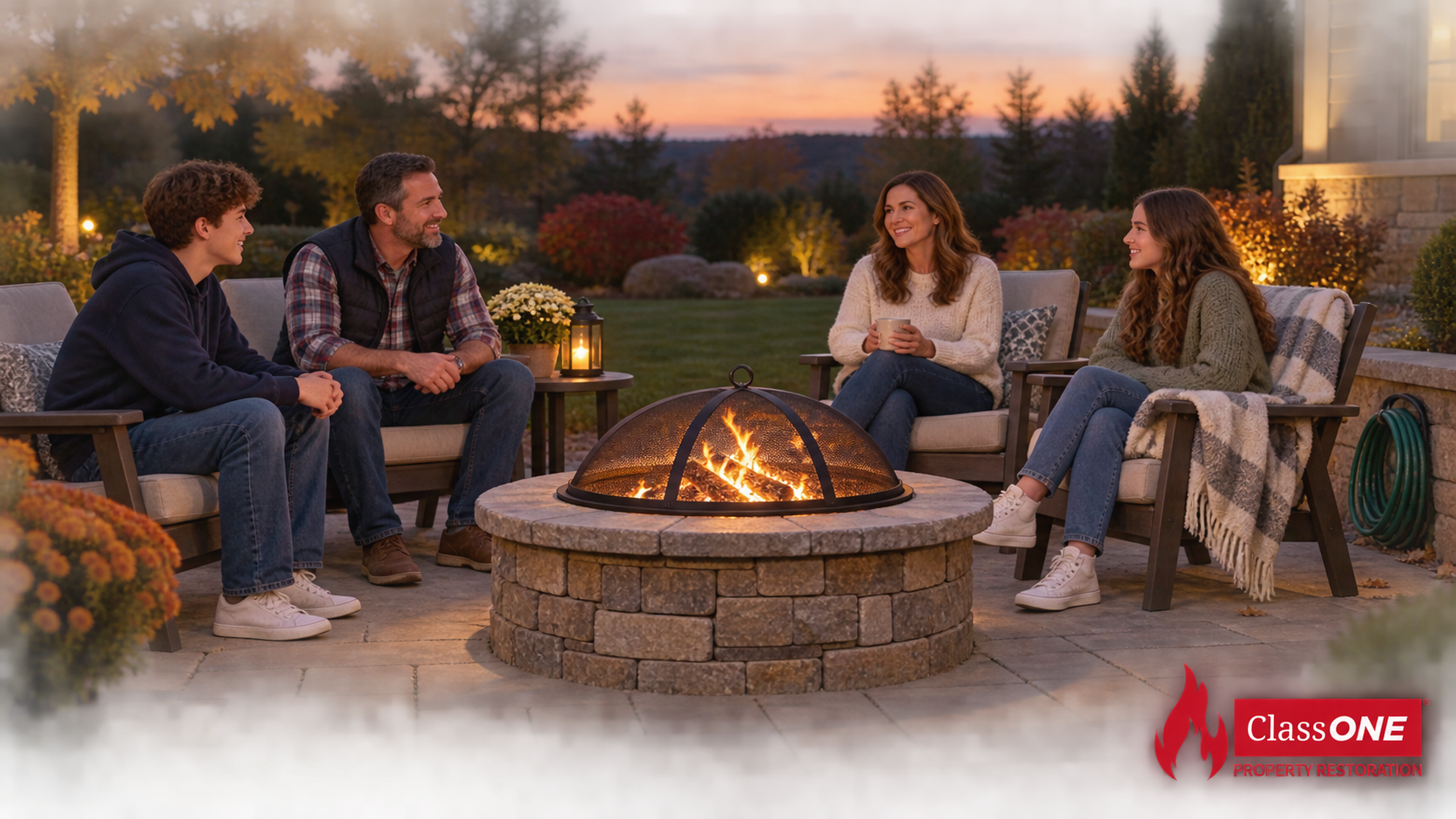
Outdoor fire pits provide warmth and a comfortable gathering place, but they can create a serious fire risk when they are not installed or used correctly. A small flame can quickly spread to nearby grass, fences, decks, landscaping, or a home.
By following a few basic safety practices, homeowners can enjoy an outdoor fire while reducing the risk of injury and property damage.
Check Local Rules Before Lighting a Fire
Before installing or using a fire pit, check local fire codes, homeowners’ association rules, burn restrictions, and insurance requirements. Some communities restrict open fires, particularly during dry or windy conditions.
Always follow the fire pit manufacturer’s instructions in addition to local requirements.
Choose a Safe Location
Place your fire pit on a stable, noncombustible surface such as concrete, brick, or stone. Never place it directly on a wooden deck unless the unit and protective surface are specifically approved for that use.
Do not position a fire pit under a roof, beneath tree branches, or near the house. It should be kept a safe distance from:
- Homes and garages
- Fences and sheds
- Decks and vehicles
- Trees and overhanging branches
- Dry grass and combustible landscaping
- Outdoor furniture and stored firewood
The required distance varies by location and fire-pit type, so follow all local regulations and manufacturer guidance.
Clear the Surrounding Area
Remove dry leaves, grass, paper products, and other combustible materials from the area surrounding the fire pit. Wind can lift a single ember and carry it into nearby landscaping or onto a roof.
Keep loose clothing and flammable liquids away from the flames. Never use gasoline or another accelerant to start or revive a fire.
Use a Spark Screen and Supervise the Fire
A properly fitted spark screen can help contain burning embers. Even with a screen in place, never leave a fire unattended.
A responsible adult should supervise the fire at all times. Keep children and pets a safe distance from the flames and from hot fire-pit surfaces, which may remain dangerous long after the fire appears to be out.
Burn Only Appropriate Fuel
Use only approved, dry firewood in a wood-burning fire pit. Never burn trash, plastic, treated lumber, or construction materials. These items can release toxic fumes, create unpredictable flames, and send hazardous debris into the air.
For gas fire pits, routinely inspect hoses, fittings, and connections for damage. If you smell gas or suspect a leak, turn off the fuel supply if it is safe to do so. Do not use the appliance until it has been professionally inspected.
Pay Attention to Weather Conditions
Check the weather before lighting a fire. Strong or shifting winds can carry sparks and embers toward your home or a neighboring property.
Do not use an outdoor fire pit during:
- High winds
- Drought conditions
- Red-flag warnings
- Local burn bans
Keep a fully charged garden hose, bucket of water, or properly rated fire extinguisher within easy reach.
Extinguish the Fire Completely
Never leave the area until the fire is completely extinguished. For a wood-burning fire pit, follow the manufacturer’s instructions and add water gradually while stirring the logs and ashes. Continue until everything is thoroughly wet and cool.
Check the fire pit again before going inside. Hot ashes can remain dangerous for hours and may reignite if placed in a trash container too soon. Dispose of cooled ashes in a covered metal container kept away from combustible materials.
If a Fire Damages Your Property
A backyard fire can damage siding, roofing, windows, decks, fences, landscaping, and interior rooms. Smoke odors and soot can also travel throughout a home, requiring professional cleaning and deodorization. Water used to extinguish the fire may cause additional damage.
If a fire occurs:
- Move everyone to a safe location.
- Call 911 or your local fire department.
- Do not enter a damaged structure until authorities declare it safe.
- Avoid touching soot-covered surfaces or attempting extensive cleanup yourself, as improper cleaning can spread or permanently set soot residues.
- Contact a qualified property-restoration company when it is safe to do so.
Enjoy Your Fire Pit Responsibly
A properly installed and maintained fire pit can be enjoyed safely when homeowners respect the fire, monitor conditions, and protect the surrounding property. Safe placement, appropriate fuel, constant supervision, and complete extinguishment are simple steps that help protect people, homes, and neighboring communities.
If your home experiences fire, smoke, soot, or water damage, ClassONE Property Restoration is ready to provide professional emergency cleanup and restoration services throughout South Central Pennsylvania.
Together, We’ve Got This!